What AI can now do with the footage you already shot, and how to use it without breaking the trust in the image.
I have spent 17 years in production and VFX.
And for most of that time, "we'll fix it in post" was a sentence that made the VFX team quietly sigh.
It usually meant one of a few things.
The light went before the last setup.
The wardrobe was wrong in two scenes.
There was a crew member reflected in a window.
The client changed the location after the shoot.
Each of those fixes used to mean days of roto, paint, compositing, or a reshoot nobody wanted to pay for.
AI has not made that work disappear.
But it has changed what is realistic to fix on real footage, and how quickly.
Start with the plate, not the prompt
The most important idea in AI VFX on real footage is simple.
The plate is the truth.
The actor's performance.
The camera move.
The timing of the cut.
All of that already exists, and all of it was paid for.
The job of AI here is not to invent a new shot.
It is to change specific things inside a shot you already have, and leave everything else alone.
That changes how you brief the work.
You are not describing a scene.
You are describing a change.
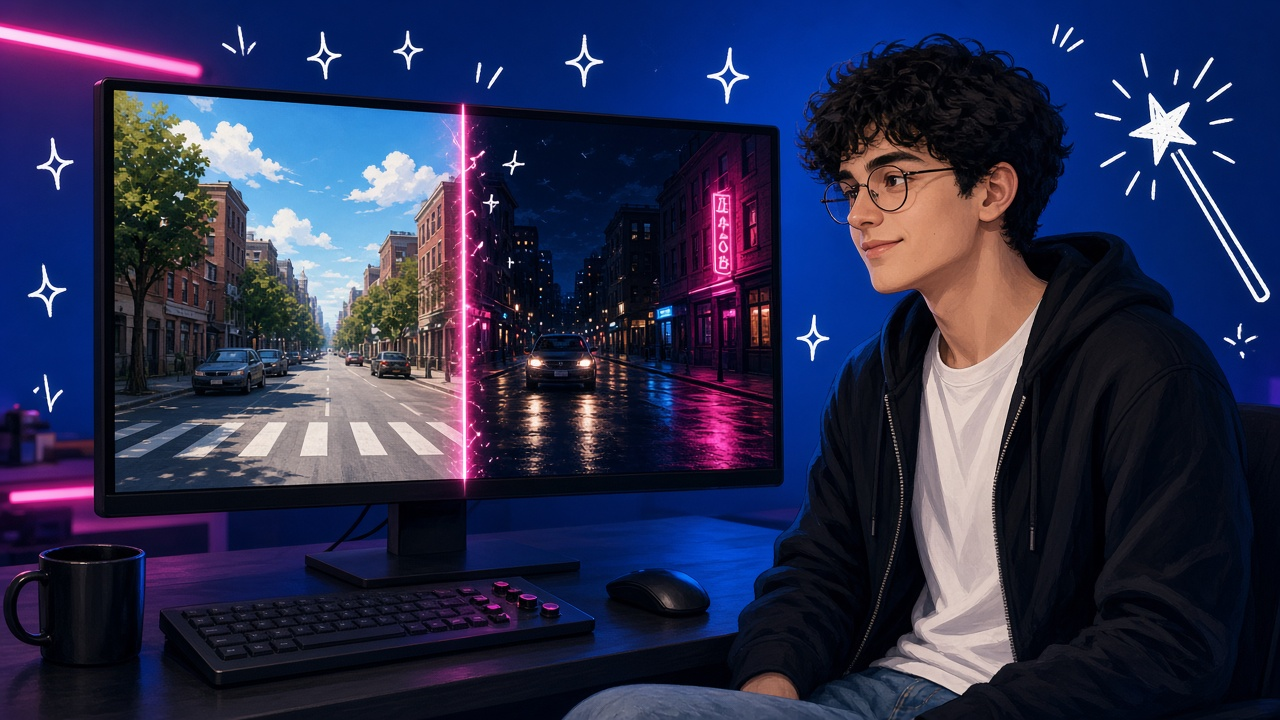
Relight: day to night, and everything between
Relighting is one of the most useful tools in this space.
A scene shot in flat afternoon light can be pushed toward golden hour.
A day exterior can become a night exterior.
An interior can take on the colour of a practical you never had on set.
The craft question is motivation.
Where would the new light come from?
Relight plate SH 18 to night. Key from the shopfront on frame right, warm tungsten. Cool ambient from the sky. Wet pavement reflections. Keep the actor's performance, framing and camera move unchanged.
A relight that has no source in the world will always look like a filter.
Give it a source and it starts to look like a decision.
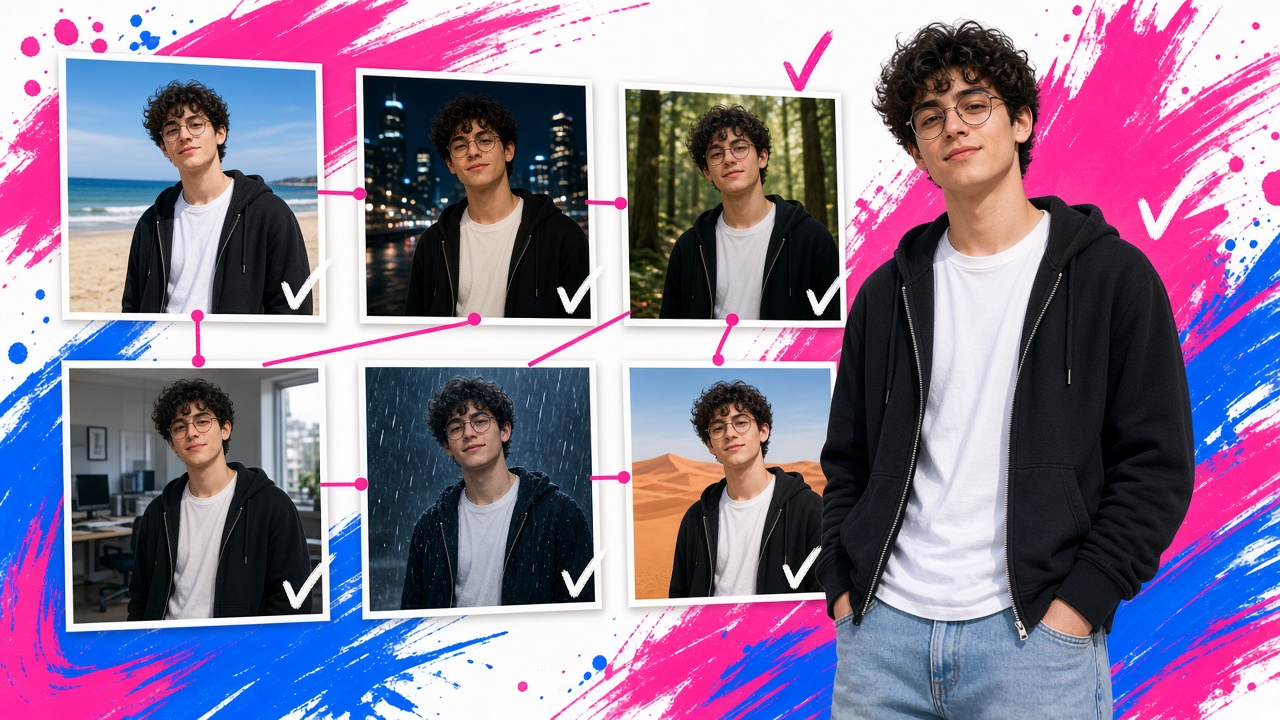
Wardrobe change
Wardrobe problems are some of the most common continuity breaks.
A jacket on in one setup and off in the next.
A logo that can't be cleared.
A brand colour that needs to change for a different market.
AI wardrobe change works on the existing performance, so the actor still moves exactly as they did.
Be precise in the brief.
The garment.
The material.
The colour.
How it should behave when they move.
And always check the edges: collars, cuffs, hair over the shoulder and hands crossing the body. That is where a wardrobe change shows itself.
Location swap
Sometimes the performance is right and the place is wrong.
The street was too busy.
The room was too small.
The client wants the same scene in a different city.
A location swap keeps the actor and replaces the world around them.
This is where camera knowledge matters most.
Lens, height and movement in the new location have to match the original plate.
The light on the actor has to make sense in the new space.
If the background and the actor are lit by two different suns, the audience will feel it, even if they can't say why.
Object removal
This is the classic paint job.
A boom in frame.
A crew reflection.
A sign you don't have rights to.
A stray coffee cup on a period set.
AI removal can handle a lot of these quickly, especially on moving shots where traditional clean plates are hard to get.
Check the fill over the full duration of the shot, not just one frame. Removal tends to break on parallax, on shadows the object was casting and on reflections of it elsewhere in frame.
Clay to final, and green screen
Two other workflows are worth knowing.
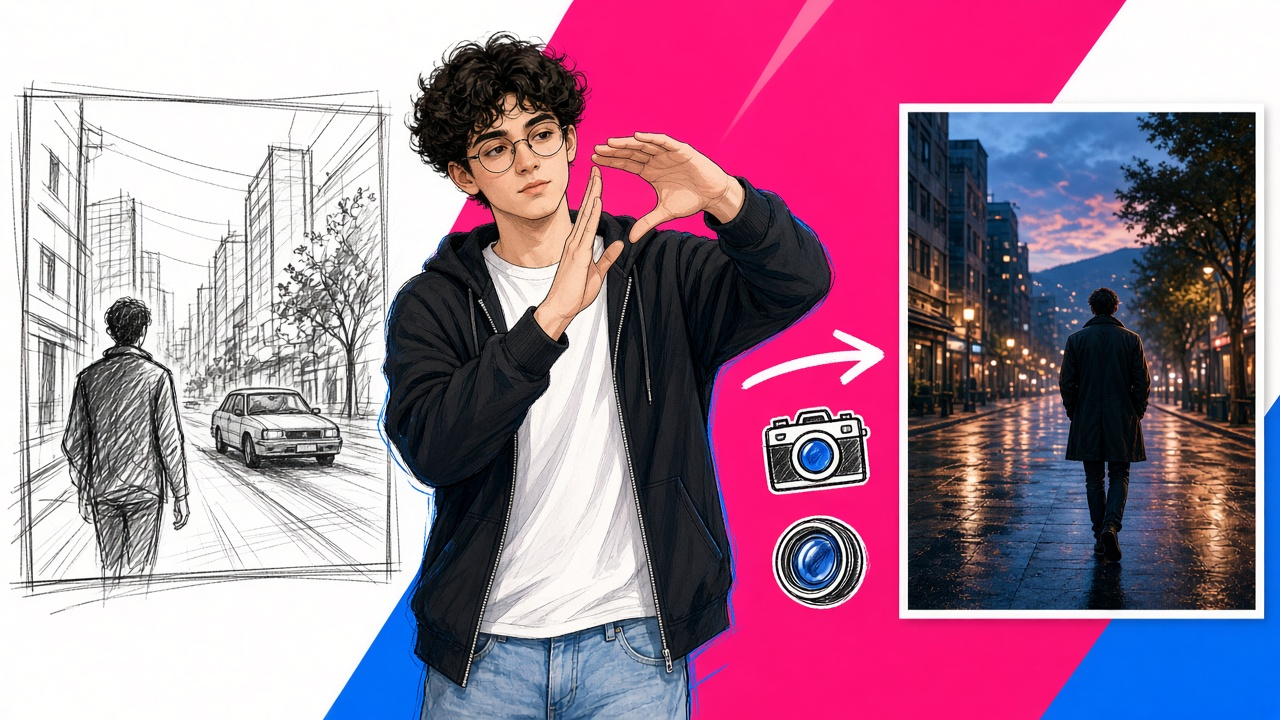
Clay to final takes a rough render or a grey previs pass and turns it into a finished look while keeping the layout and motion.
Green screen work lets you shoot your actors cleanly and build the world around them afterward.
Both share the same principle.
You lock what matters, the motion and the performance, and you let AI handle the surface.
Deliver like it's going to a real pipeline
AI VFX shots still have to live inside a real edit and a real grade.
So deliver them in formats that hold up.
An MP4 is fine for review.
For finishing, colourists and compositors usually want something like ProRes or OpenEXR, so there is room to grade without the image falling apart.
And keep the original plate alongside every version. You will want to compare.
This is one of the reasons we built FrameOn
Our team has delivered more than a hundred AI films for clients through our own pipeline, and a lot of that work involved real footage that needed help.
So FrameOn's VFX tools work on your own plates.
Change location or wardrobe.
Remove objects.
Relight day to night.
Clay to final.
Green screen.
Exports are MP4, ProRes 422 HQ and OpenEXR, so the shots can go straight into a finishing pipeline.
Every shot is priced before it runs, and nothing generates until you approve. When you ask Cue, the production agent in the app, for a change, it comes back with a priced proposal first.
And review links let directors and clients draw on the frame and leave voice notes, which Cue turns into tasks.
Respect the image
The best VFX has always been invisible.
Nobody leaves a film talking about the clean removal of a boom mic.
They just believed the shot.
AI doesn't change that standard.
Change only what needs changing, and protect everything that was already true.
If you have plates that need this kind of help, FrameOn's early access is open at frameon.us.
— Founder, FrameOn
FrameOn Creativity is yours. The tools are ours. frameon.us