How to plan, write and produce short episodic drama with AI without losing the story, the cast or your schedule.
Microdramas are a strange and wonderful format.
Short episodes.
Big hooks.
A cliffhanger every minute or two.
And an audience that will binge an entire season on a commute if you give them a reason to tap the next one.
After 17 years in production and VFX, I have come to think of microdrama as the most demanding format for AI.
Not because the shots are difficult.
Because there are so many of them, and they all have to belong to the same story.
A microdrama is not one film. It is a production line that has to feel like one film.
Start with the master story, not episode one
The most common mistake is writing episode one, generating it, and then figuring out episode two.
That works for about three episodes.
Then the threads start to tangle.
Instead, write the whole story first, as one piece.
The premise.
The central relationship.
The secret.
The turn at the midpoint.
The ending you are building toward.
Only once the master story holds together should you think about where to cut it.
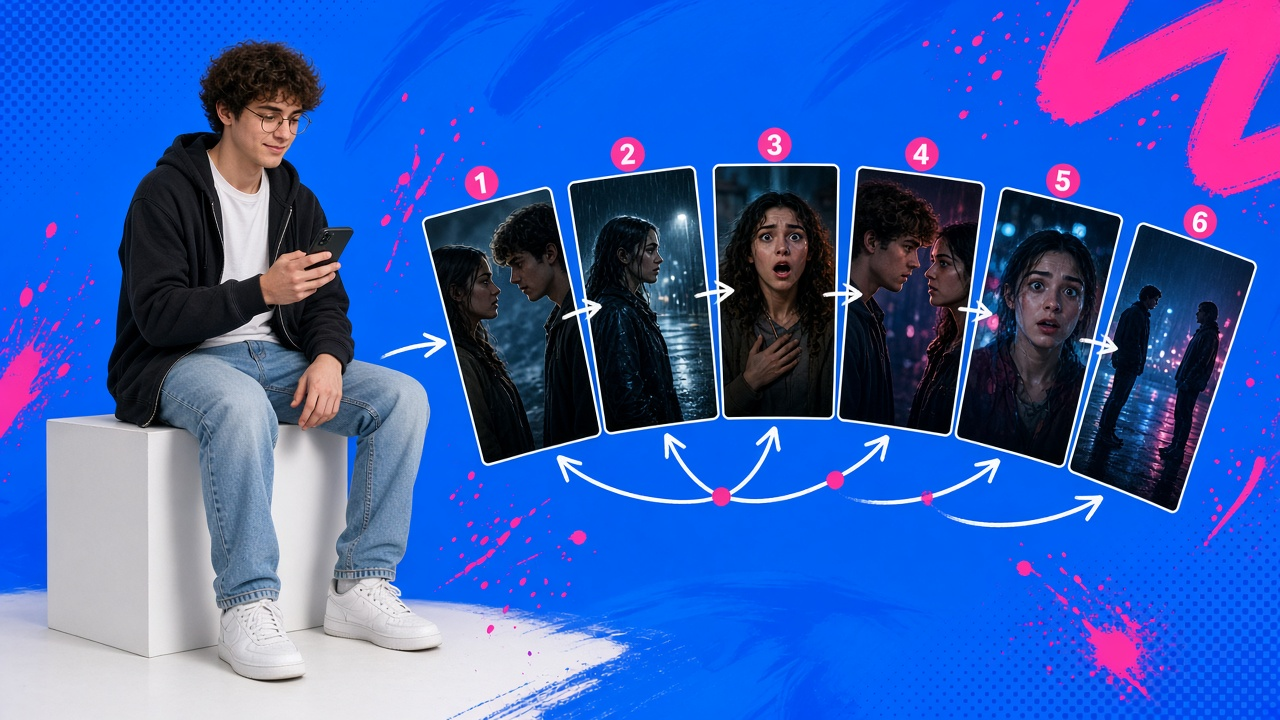
Split the story into episodes with intent
Every episode needs a job.
A practical way to break the master story:
Find the big reversals first. These become your season anchors.
Find the moments of tension that can sustain a cut. These become episode endings.
Fill the space between with scenes that move the relationship forward.
Then check each episode against three questions.
What does the audience learn?
What does the character want?
Why will they tap the next one?
If an episode can't answer the third question, it needs a stronger ending.
A simple episode note might look like this:
EP 07. Rhea finds the second phone in Arjun's car. She doesn't confront him. She smiles, puts it back and texts the unknown number: "I know." Cut on Arjun's phone lighting up in his pocket.
That is a whole episode's purpose in four lines.
Lock the cast before episode one
In a long-form film you might shoot a character for a few weeks.
In a microdrama season, your lead may appear in hundreds of shots.
If the face drifts in episode twelve, the whole season feels cheap.
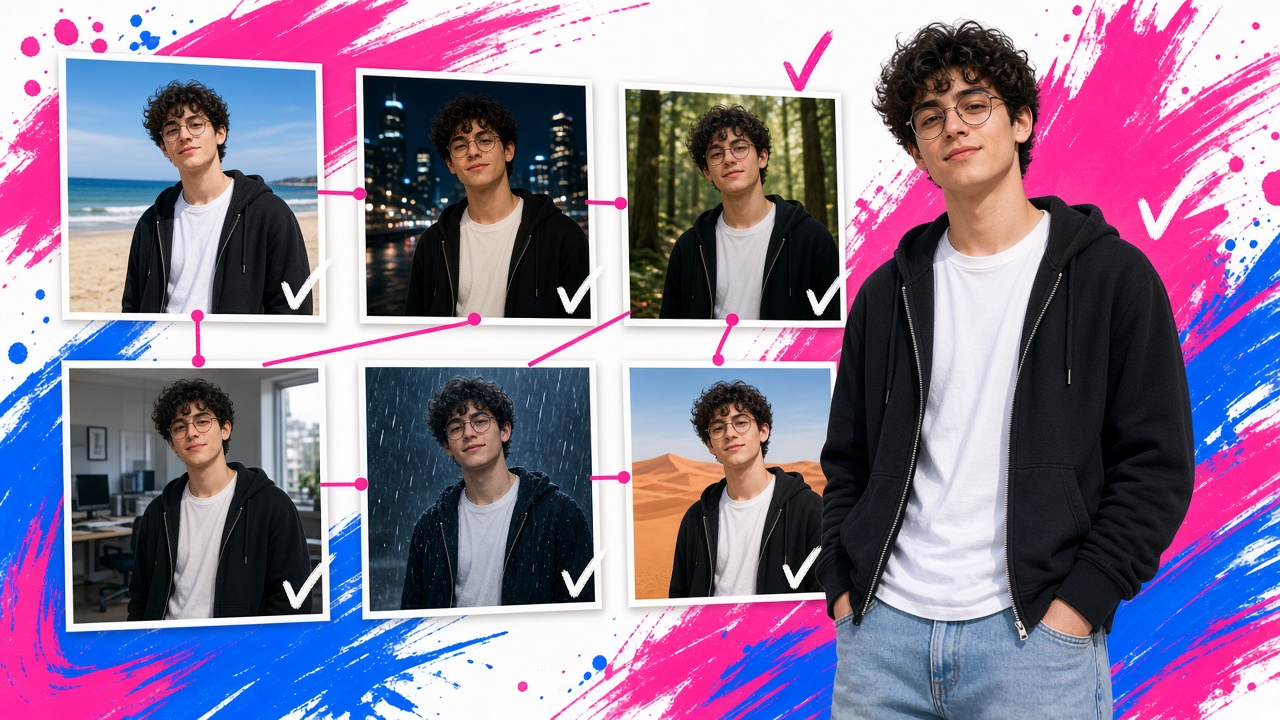
So lock every recurring character before production starts.
Face.
Wardrobe.
A turnaround of views.
Keep a clear record of costume changes that happen on purpose, so a new outfit in episode nine is a story choice and not an accident.
Do the same for recurring locations. The apartment, the office, the car. If the audience keeps returning there, it should look like the same place every time.
Write for the frame you are delivering
Most microdramas are watched vertically on a phone.
That changes the grammar.
Close-ups carry more of the story.
Two-shots get tighter.
Wide shots are rarer, and they have to earn their place.
Text on screen has to survive a small display.
Write and board with that frame in mind from the start. It saves you from generating beautiful horizontal compositions that fall apart when cropped.
Build a repeatable episode pipeline
Once the story and the cast are locked, every episode can follow the same steps.
Script the episode from the master outline.
Break the script into a shot list.
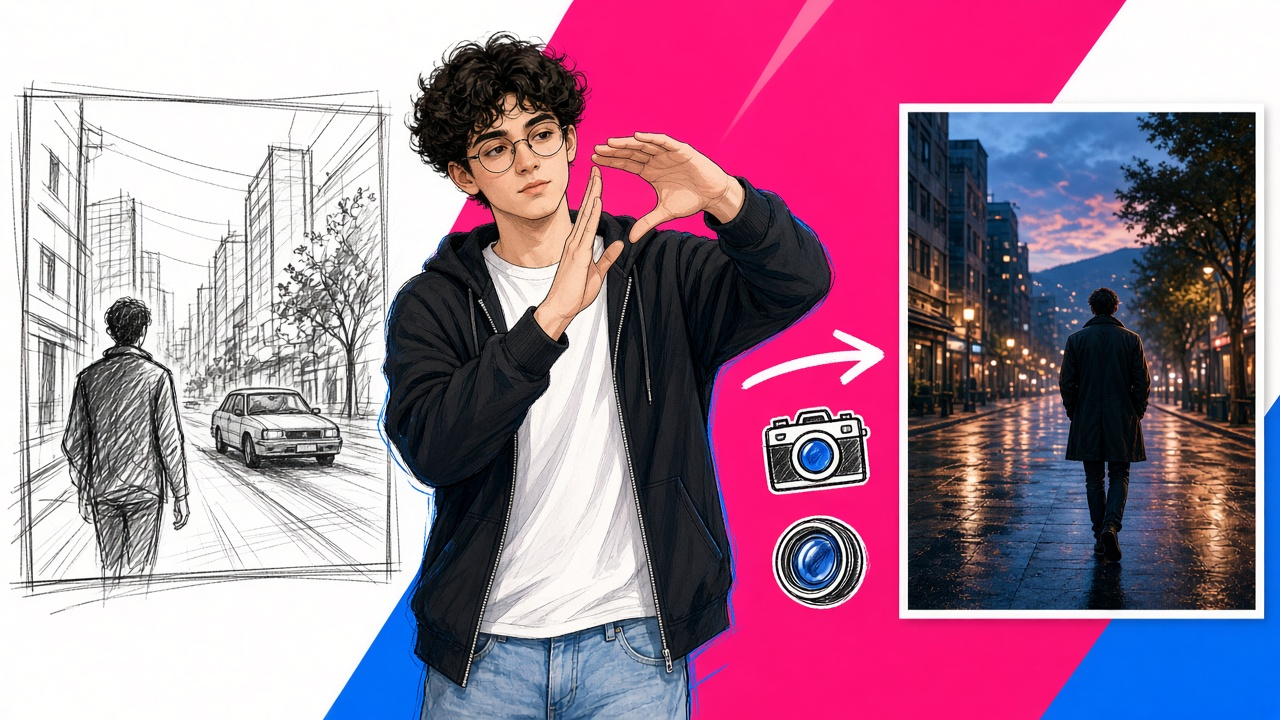
Board the key moments.
Write the prompts for each shot.
Review what comes back against the locked references.
Cut, add sound and music, and deliver.
The point of a pipeline is that nobody has to reinvent the process on episode fifteen.
You just run it again.
Keep the budget visible per episode
A season multiplies everything.
A habit that costs a little extra on one episode costs a lot across thirty.
So track spend at the shot level, not only at the project level.
Which shots needed the most retries?
Which models were used for which kinds of shots?
Where did a cheaper pass at lower resolution make sense for review?
These answers shape how you produce the next episode.
Make review fast or it becomes the bottleneck
With many episodes in flight, notes pile up quickly.
The director has notes.
The client has notes.
The writer has a note about a line that changed.
If those notes live in chat threads and screenshots, things get missed.
Notes should land on the frame they are about, and turn into tasks someone can actually close.
This is one of the reasons we built FrameOn
Our team has delivered more than a hundred AI films for clients through our own pipeline.
The episodic work taught us the most, because every weakness in a process shows up thirty times.
FrameOn has a series mode built for exactly this.
You write a master story with Cue, the production agent in the app, and it splits the story into episodes.
The cast is locked once, face, wardrobe and five views, and stays locked across every episode.
Locations are built in 360, so you can come back to the same room from a different angle.
Every shot is priced before it runs, and nothing generates until you approve.
And review links let directors and clients draw on frames and leave voice notes, which Cue turns into tasks.
The cliffhanger is the easy part
Anyone can write a twist.
The hard part is making episode thirty feel like it came from the same hands as episode one.
Same faces.
Same rooms.
Same tone.
Same care.
Get the workflow right, and the story gets to do the rest.
FrameOn's early access is open at frameon.us, if you want to try this on your next series.
— Founder, FrameOn
FrameOn Creativity is yours. The tools are ours. frameon.us